

Better for Plants.
Kinder to Pollinators.
Nurturing Your Harvest
Safe Solutions for a Thriving Farm
and a Buzzing Planet.

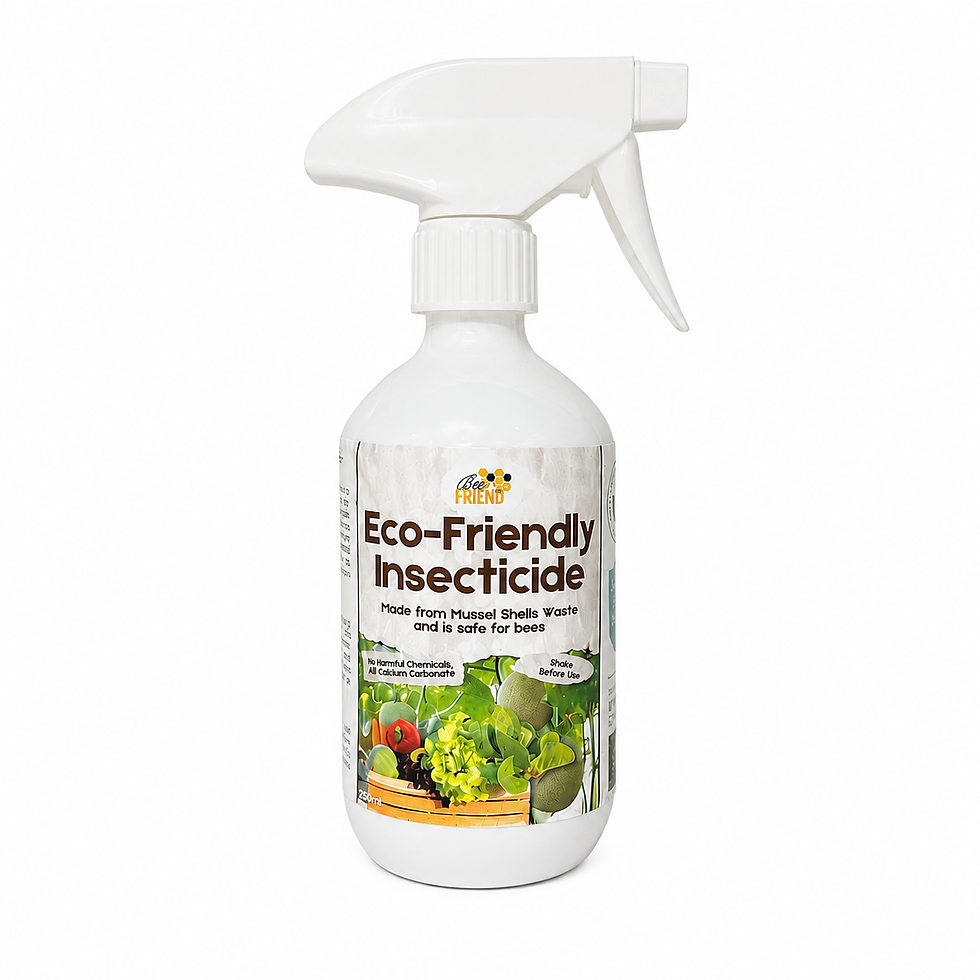
Bee-Safe Insecticide
100% Organic Made From Food Waste
BeeFriend provides an innovative alternative insect control without resorting to harsh chemical treatments, which are detrimental to pollinators, the environment, and human health.
Conventional insecticides can have long-term effects on biodiversity, soil, water, and food safety. BeeFriend offers a more sustainable alternative using Bio-Calcium Carbonate upcycled from discarded green mussel shells.
BeeFriend combines research, natural ingredients, and sustainability to provide effective insect control. It protects your garden while remaining safe for pollinators, pets, and human.

Turning Food Waste into
Sustainable Innovation
The future for our agriculture and ecosystems through dedicated research
By upcycling discarded green mussel shells from local seafood industries and coastal communities, we transform what was once a waste stream into a valuable resource. This supports the local community by encouraging
economic activity, reducing environmental burden, and fostering a circular economy.


BeeFriend founder, Pammy, is engaging with local fishermen and the seafood industry to explore the challenges and environmental impact of mussel shell waste in Thailand's coastal communities.
The development of BeeFriend was inspired by the need for insect-control solutions that protect our vital pollinators and the environment. Our innovation is rooted in rigorous scientific research that validates the transformative potential of green mussel shell waste to be converted into Bio-Calcium Carbonate as a safe insecticide.
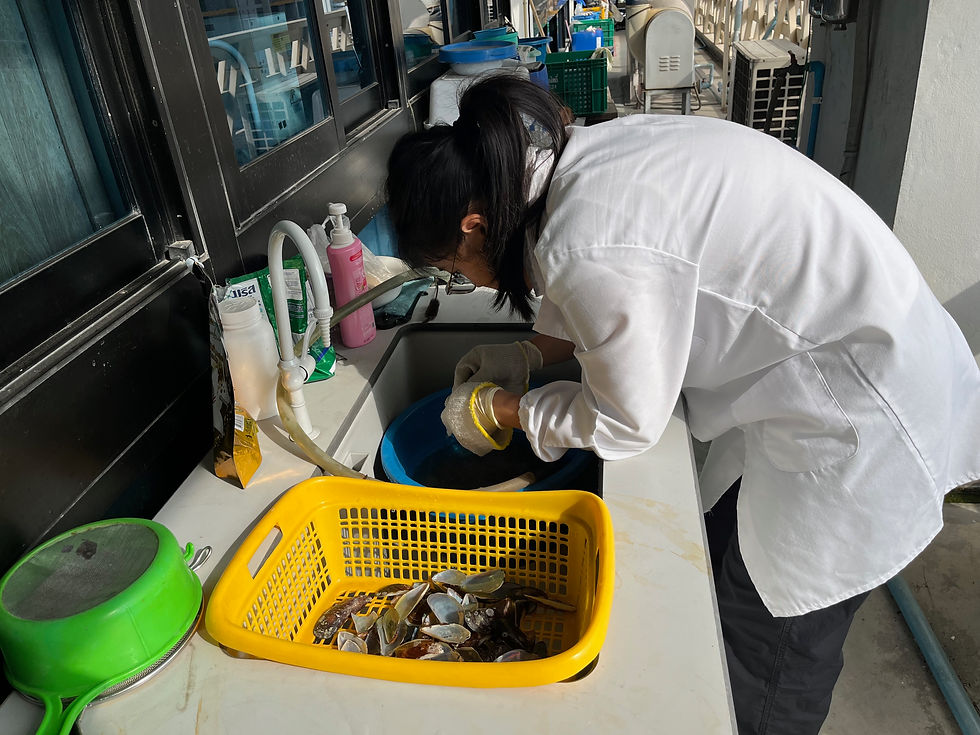

Pammy in Chulalongkorn University's lab, cleaning mussel shells and later examining the resulting Bio-Calcium Carbonate particles under a microscope during the research process.
Community Outreach
BeeFriend works closely with beekeepers, organic farmers, city park officers, and government agencies to promote sustainable insect management.
Through workshops, field demonstrations, and community outreach, we share practical knowledge and encourage collaboration to protect pollinators and support more sustainable communities.

